If you’re like me and grew up immersed in diet culture, you probably have a negative association with food journaling. The word alone might bring to mind obsessive calorie counting, weighing every bite, and plugging data into an app – only to use that information to judge yourself. No wonder so many people avoid it altogether.
But here’s the good news: food journaling doesn’t have to be like that. In fact, it shouldn’t be.
The kind of food journaling I do with clients is rooted in curiosity, not criticism. I see it as both a tool and a skill – something that helps you understand your habits and something you get better at over time.
Food Journaling as a Tool
One of the first things I remind clients is that meaningful change starts by knowing where you’re starting from. Progress doesn’t come from jumping straight from “nothing” to “everything” (hello, all-or-nothing thinking). It comes from small, consistent improvements – and that requires awareness.
This is where food journaling shines. But there’s a catch: you have to drop the judgment.
The goal is to become a scientist, not a critic. Think observation, not evaluation. Let your journal be a place of neutral curiosity:
“Huh, I always seem to crave sweets around 3 p.m. Did I skip protein at lunch? Am I tired? Could a quick walk help instead?”
When you ask questions instead of casting blame, you create space for real solutions. Sometimes, it’s not even about what you’re eating, but how and why.
A good journal helps answer deeper questions:
- When do I find it hardest to eat well?
- Who am I with when I make healthier choices? And when I don’t?
- Where am I eating? (What’s the environment like?)
- Why am I eating right now if I’m not physically hungry?
These insights offer a far more useful roadmap for change than any calorie count ever could.
Choosing the Right Tool
Like any tool, journaling has to fit the job. You wouldn’t use a screwdriver to hammer a nail – and you don’t need to use a clunky food app if it doesn’t serve you.
Personally, I don’t love the traditional food-tracking apps. But tools like Ate are different – they’re more intuitive, visual, and flexible. They make it easier to spot patterns and focus on why we eat, not just what.
Food Journaling as a Skill
Just like riding a bike, journaling is a skill that feels awkward at first. You won’t get it perfect right away – and that’s totally okay. The point is to stick with it, be kind to yourself, and let the practice evolve.
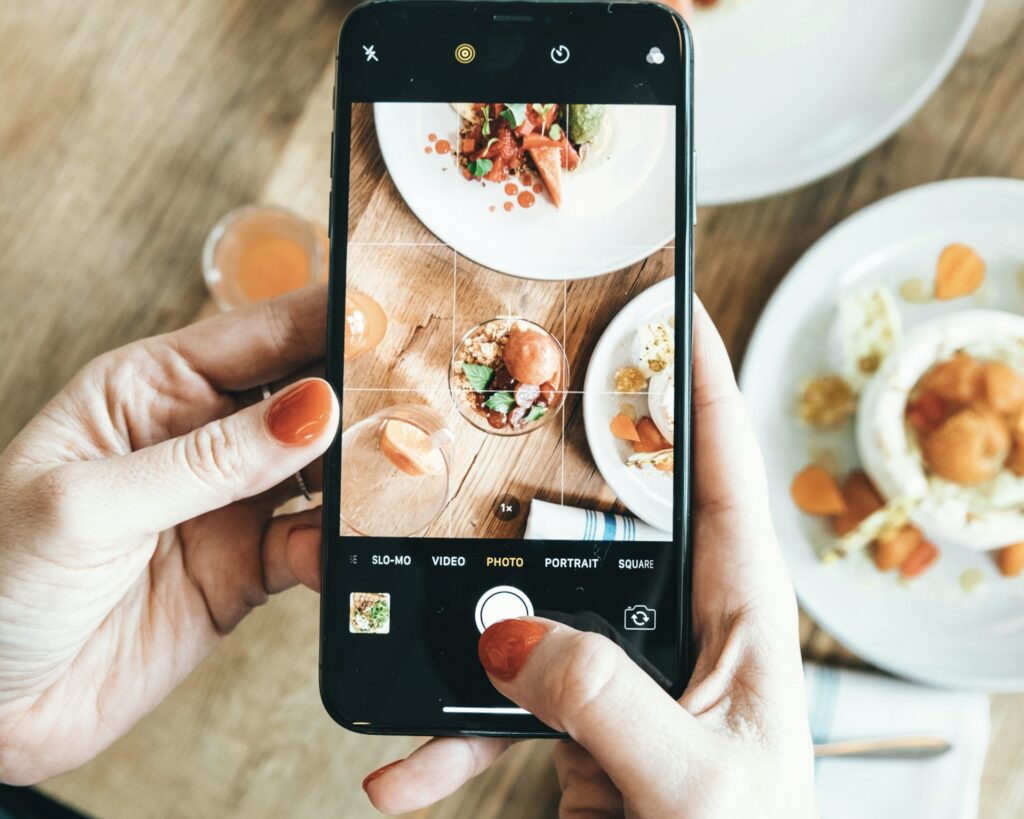
If food journaling hasn’t worked for you in the past, it might be because the approach didn’t fit – or you weren’t given space to be curious instead of critical. Try thinking of it as something to get good at over time. For me, photo journaling felt like the easiest entry point.
Food journaling isn’t about perfection. It’s about awareness—and ultimately, about connection: to your body, your emotions, your habits.
When we let go of shame and lean into curiosity, we open the door to self-compassion and better choices. You don’t need to overhaul your life overnight. Just start by noticing.
Because when we understand ourselves better, we feel better – and that’s really what we’re all aiming for anyway.
💙 Robyn
Interested in a one-on-one health coaching relationship with me? It would be an honor to work with you if and when the time feels right.
To learn more about Personal Health Coaching click HERE.
To schedule a Discovery Session click HERE