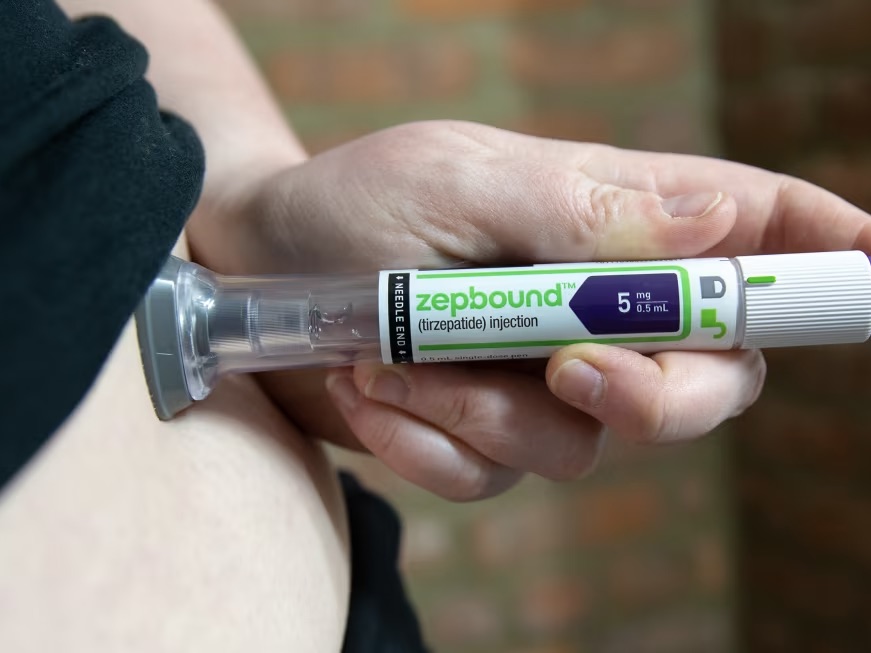
If you’re considering starting a GLP-1 medication, chances are this isn’t your first attempt at change.
You’ve likely tried eating differently.
Exercising more.
Tracking.
Restricting.
Hiring a personal trainer.
And maybe it worked… for a while.
But not in a way that lasted.
And now you’re wondering:
“If I’m going to do this… how do I do it well?”
The truth is: GLP-1 medications can be powerful tools. But the women who feel the most steady and successful on them are the ones who prepare before the first injection.
Here’s how.
1. Build a Protein Baseline
One of the biggest mistakes I see?
Women wait until their appetite drops to start thinking about protein.
By then, eating can feel like a chore.
Before you begin:
- Notice how much protein you’re currently eating.
- Practice including protein at breakfast.
- Experiment with easy, repeatable lunches.
- Identify 3–4 “default dinners” that feel simple and balanced.
You don’t need perfection.
You need familiarity.
Because once appetite decreases, structure becomes more important — not less.
2. Consider Adding Some Strength Work
GLP-1s reduce appetite. They don’t protect muscle.
That doesn’t mean you need to overhaul your life overnight.
If the idea of strength training feels overwhelming, start small:
- One short session per week
- Light weights or resistance bands while watching TV
- A few movements that help you feel steadier and stronger like sit-to-stands
Momentum matters more than perfection.
Your version of strength training does not have to look like anyone else’s.
It just has to feel doable.
3. Increase Fiber and Hydration
If digestion has already been a struggle for you, don’t ignore that. GLP-1 medications slow gastric emptying by design — which can worsen existing constipation.
Before starting, consider:
- Increasing water intake
- Slowly building fiber
- Discussing concerns with your provider
Your doctor can help you create a proactive plan instead of reacting once symptoms appear.
4. Gently Notice “Last Supper” Thinking
This one is tender.
It’s very common to feel a little urgency before starting medication.
You might notice thoughts like:
- “I won’t be able to eat this once I start.”
- “This is my last chance.”
- “I should enjoy this now while I can.”
There’s nothing wrong with you if that voice shows up.
It’s a very human response to change — especially after years of dieting rules and restriction.
But here’s what’s important to remember:
GLP-1s are not food prisons.
They don’t eliminate foods.
They simply reduce appetite and food noise.
If you can enter this phase with curiosity instead of urgency, you’ll likely feel steadier once you begin.
No rebellion.
No “before and after” drama.
Just a transition.
And transitions go more smoothly when we don’t frame them as deprivation.
5. Build a Support Team (However That Looks for You)
You can absolutely start a GLP-1 on your own.
Many women do.
But it’s worth pausing to ask:
Who will support you if nausea hits?
Who will help you think through protein and muscle preservation?
Who will normalize a slow week on the scale?
Who will help you adjust if weight loss stalls?
Who will guide you if you ever taper or transition off?
Your support team might include:
- Your prescribing provider
- A registered dietitian
- A health coach
- A personal trainer
- A therapist
- A partner or trusted friend
It doesn’t have to be formal.
It doesn’t have to be expensive.
But it helps not to do it alone.
The medication manages appetite.
It doesn’t automatically build habits, confidence, or long-term strategy.
And those pieces — the behavioral, emotional, and strength-preserving parts — are what make weight loss sustainable, whether you stay on the medication long-term or not.
Support doesn’t mean you’re incapable.
It means you’re thoughtful.
6. Get Clear on Your “Why”
Not the scale number.
The deeper why.
- More energy?
- Less food noise?
- Better labs?
- Feeling strong in your body?
- Walking into midlife with intention?
Write it down before you start.
Because on the days when you feel tired or uncertain, clarity will steady you.
Final Thoughts
There’s nothing impulsive about this decision.
If you’re reading this, you’ve likely thought it through.
Preparing doesn’t mean you have to get everything perfect before you begin.
It simply means giving yourself a smoother on-ramp.
A little protein awareness.
A little strength.
A little hydration.
A little clarity about support.
Small steps that make the transition feel less dramatic — and more intentional.
And intentional change tends to last longer than urgent change ever does.
One last thing.
If you’ll be using an injection pen or vial, it’s completely normal to feel a little nervous about giving yourself the first shot.
Even women who are calm about the medication itself sometimes feel anxious about the mechanics of it.
If that’s you, a little preparation can go a long way.
Watching a few demonstration videos ahead of time — from the manufacturer or your provider — can make the process feel much less intimidating. Seeing the steps clearly laid out often reduces the fear of the unknown.
You might also:
- Have someone nearby the first time if that feels reassuring
- Ask your provider’s office to walk you through it
Most women are surprised by how quick and manageable it actually is.
Sometimes the anticipation is the hardest part.
Here are a few helpful instructional videos:
If you’re already scheduled to begin, you might also want to read what typically happens in the first few weeks on a GLP-1 — so you know what’s normal and what’s not.
👉 What to Expect in Your First Few Weeks on a GLP-1
💛 Robyn
Curious whether GLP-1 coaching support would be helpful for you?
→Learn more here
Ready to talk it through?
→Schedule a Discovery Session